Amish Quilt: A Modern Twist on Traditional Craft
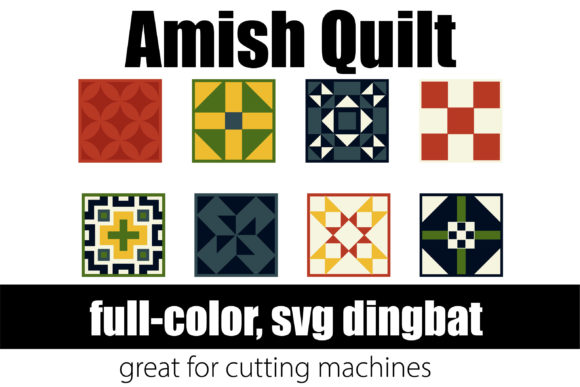
The world of design often draws inspiration from the past, reinterpreting classic motifs for contemporary audiences. The Amish Quilt typeface is a perfect example of this, bridging the gap between time-honored textile art and modern digital tools. As a full-color dingbat font, it doesn't function like a traditional serif or sans serif font for body text. Instead, it serves as a specialized creative font, offering a collection of simple, geometric quilt patterns. Each character you type generates a distinct, color block design reminiscent of classic Amish quilting. This unique approach makes it a powerful design asset for anyone looking to infuse projects with warmth, texture, and a touch of rustic authenticity.
Visual Character and Project Fit
Visually, the patterns within Amish Quilt are defined by their bold simplicity, strong lines, and rich, solid colors. They carry a personality that is both orderly and handmade-feeling, avoiding overly complex or fussy details. This style aligns beautifully with the popular Farmhouse aesthetic, making it a natural companion to fonts like Farmhouse and Farmhouse Too. Its appeal lies in its versatility as a decorative element rather than a textual one. Think of it as a set of high-quality, scalable icons or dingbats that can be used to create borders, background textures, spot illustrations, or visual accents. The font shines in projects where a tactile, crafted quality is desired. It's an excellent choice for packaging design for artisanal goods, logo design for craft businesses or bakeries, and social media graphics that need a standout, thematic element. For editorial design, it can create beautiful chapter breaks or pull-quote decorations. In web design, it can add unique flair to buttons, dividers, or hero section backgrounds, provided it's used as a graphical element rather than for crucial navigation text.
Integrating a Color Font into Your Workflow
Using Amish Quilt effectively requires a slight shift in mindset. First, installation is straightforward—it's an OpenType SVG (OTF) file installed like any other font via your system's font manager. However, its colorful nature is only visible in compatible software. In many programs, it will initially appear as a black silhouette. You'll know your environment supports it when the colors render on your canvas. Major applications like Adobe Illustrator, Photoshop, InDesign, QuarkXPress, Silhouette Studio, and the free vector editor Inkscape fully support these full-color SVG fonts. When choosing this font, evaluate your project's need for decorative, pattern-based elements. It's not for body copy but for strategic accents. Always test it in your specific software to ensure compatibility. A practical tip: pair it with clean, simple typefaces. A modern sans serif or a elegant script font can provide a striking contrast, allowing the quilt patterns to pop without overwhelming the design. Remember, as a premium font, understanding its commercial license is crucial for any business application, from client work to products for sale. Its strength lies in adding a layer of visual hierarchy and texture, helping to establish a distinct brand identity that feels both professional and deeply personal.